What is the Best Certification in Risk Management?
It can be challenging to select the most suitable certification in the field of risk management, particularly given the numerous available options. You may be wondering what would be most beneficial to your career, whether you be a student, finance professional, or transitioning to a new field altogether. The right certification can provide access to lucrative roles and international prospects.
In order for you to arrive at the optimal choice, let's simplify further.
The Value of Certifications in Risk Management
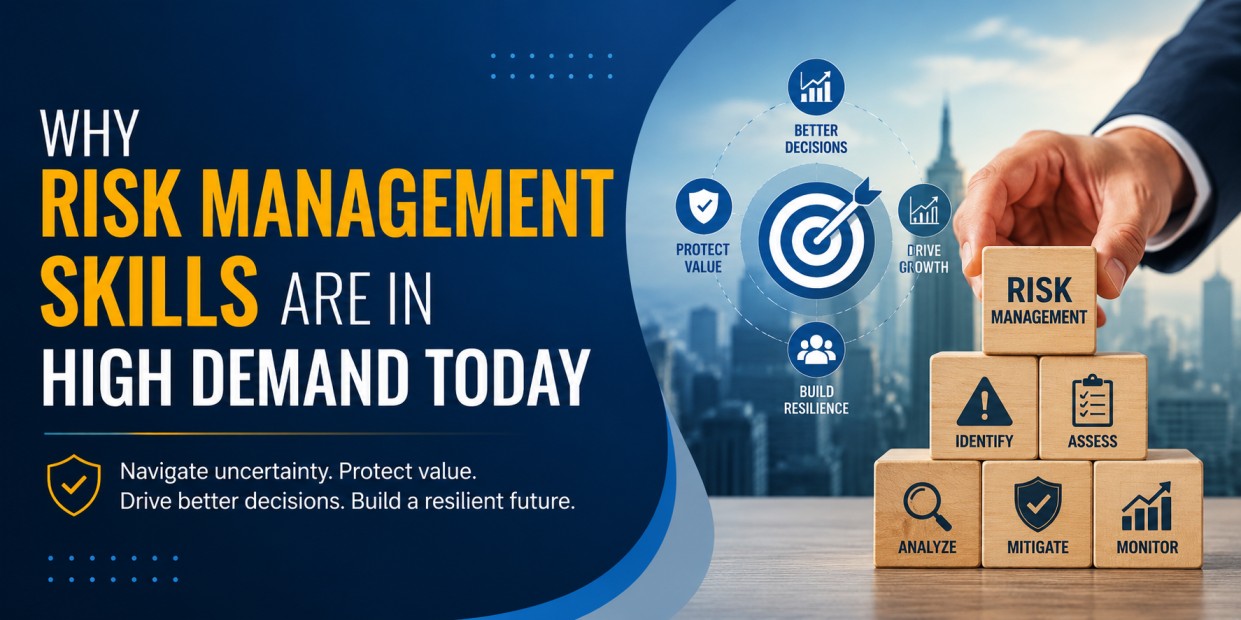
In the past, risk management roles were only available in banks and other financial institutions. However, every sector, including healthcare and technology, has a growing demand for individuals who can identify and mitigate risk.
A quality certification enables you to:
-
Develop strong analytical and decision-making competencies.
-
Enhance your marketability.
-
Boost your income potential.
-
Secure opportunities abroad.
This is why selecting the most suitable Risk Management Certificate Program is essential.
Noteworthy Certifications in Risk Management
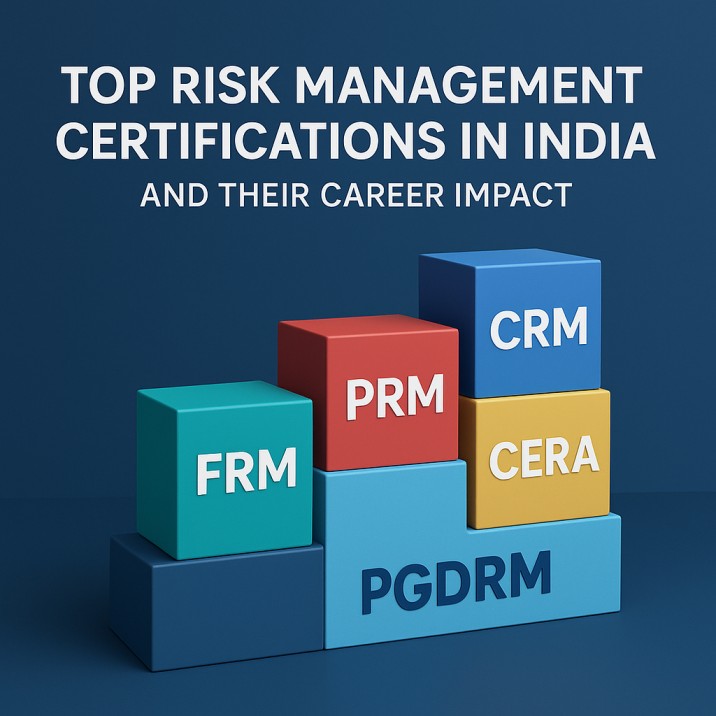
1. Financial Risk Manager (FRM)
The FRM certification is among the most prestigious designations in finance, specifically in market risk, credit risk, and investment management.
Ideal for:
-
Finance professionals
-
Investment banking specialists
-
Risk analysis experts
What is the advantage of holding an FRM?
It is considered the gold standard in most global financial institutions.
2. Professional Risk Manager (PRM)
In the realm of risk management certifications, PRM is among the most prestigious. It centers around risk theory, financial instruments, and quantitative analysis.
Best for:
-
Those who enjoys working with large datasets or analytics
-
Aspirants to executive positions in risk
Key benefits:
Allows for flexibility when taking the exams. Also widely accepted in the industry.
3. Certified Risk Manager (CRM)
Compared to its counterparts, CRM emphasizes risk management in a more practical, business-oriented approach.
Best for:
-
People in the corporate sphere
-
Those at the managerial level in operations or compliance
What makes it different:
There is a focus on practical aspects rather than purely theoretical.
4. ISO 31000 Risk Management Certification
This credential is grounded on the international standards for risk management, ISO 31000.
Best for:
-
Those in corporate governance
-
Compliance or audit professionals
Strength:
It is multi-industry, meaning it goes beyond just the finance industry.
How to Decide Which Certification is Most Appropriate For You
Choosing among several certifications is a normal part of a person’s professional journey. The best approach depends on your professional aspirations.
To clarify:
-
Is my focus on finance or corporate risk?
-
Is it more theoretical or practical I am concerned about?
-
Is it better to have global than local opportunities?
For aspiring finance positions, the recommendation is FRM or PRM.
For those with a preference for business risk or operations, it is more suitable to have CRM or ISO certifications.
How to Choose a Risk Management Certificate Program
Some of these criteria can help you find good Risk Management Certificate Programs:
-
Marketability - Do the employers prefer it?
-
Applicable instruction - Are gamification and live case studies involved?
-
Instructor presence - Are classroom facilitators practitioners?
-
Career services - Are you going to get a job out of the program?
The program you choose will likely impact the rate of your career acceleration positively.
Who is Skkew tosis?
Skkew Tosis is a new name in professional training and more specifically in the area of finance and risk management. The institute emphasizes practical and applicable, job-related skills over theoretical learning.
Skkew Tosis is different due to the following:
-
Use of real case studies
-
Job-oriented training
-
Mentorship
-
Training and job preparation
Skkew Tosis is a good option for students wanting to do real-world learning in addition to the global certifications
Is Certification Worth It
-
Prestigious job titles like Risk Analyst, Credit Analyst, and Risk Manager
-
Increase in remuneration
-
Access to exclusive professional circles
-
Enhanced decisiveness
In brief, certification is more than a credential - It is an investment into your career.
FAQs
1. What is the best certification for risk management?
There is no best certification. Depending on the role, specific risk management certifications could be more valuable. For example, the Financial Risk Manager (FRM) certification is best for finance jobs, and the Certified Risk Management (CRM) and International Organization for Standardization (ISO) certifications are more suited for corporate risk management.
2. Is a Risk Management Certificate Program worth it?
Yes. It equips you with hands-on, practical skills, enhances employability, and also boosts your earning potential.
3. Is it possible for entry-level professionals to obtain risk management certifications?
Of course. Most certification courses and programs have a beginner level and advance systematically to a high level.
4. What is the average duration for obtaining Certs?
It really is dependent on the cert you are pursuing. For instance, The Financial Risk Manager (FRM) certification and others will take 1-2 years, some will take several months.
Conclusion
Aligning your career aspirations and preferences with risk management certifications is ideal. Building a robust career in finance and business is possible, especially with a worthy Risk Management Certificate Program.
Picking the right certification will also come with the requisite skills and practical experience on top of the certification. The right choice will take some time, but you should get a job-ready certificate and a unique career in the end.
Read More: Top Risk Management Courses Every Banker Should Take in 2025
.jpg)
.jpg)
.jpg)
.jpg)
.jpg)