Why Risk Management Courses Are Essential for Today’s Banking & Finance Professionals
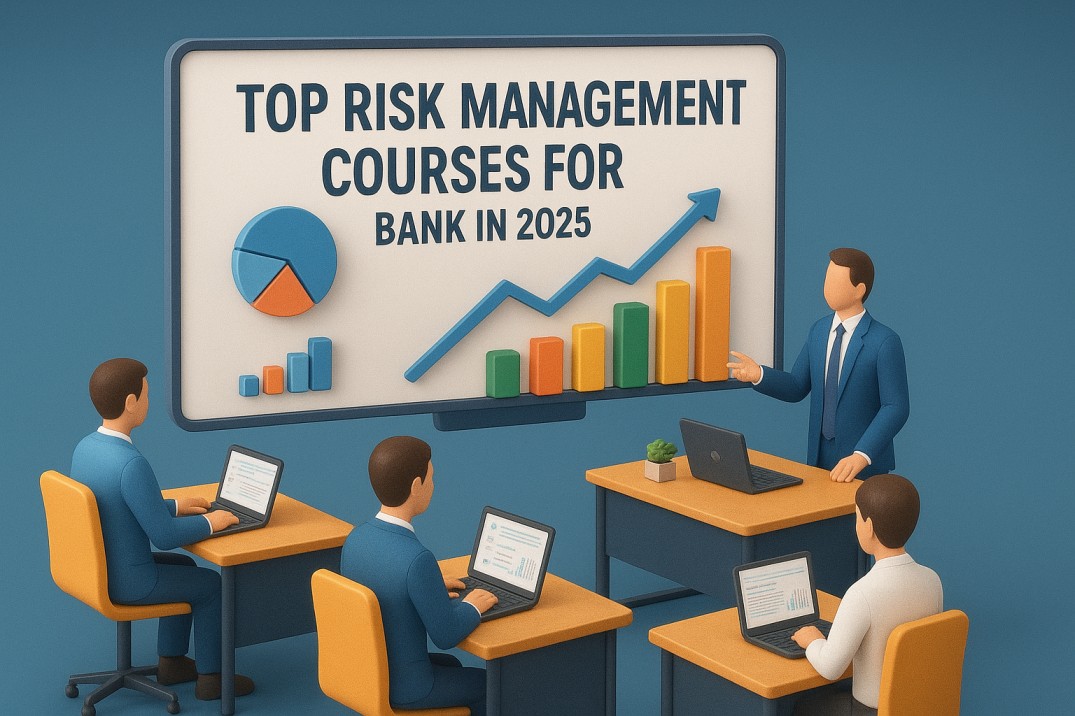
As professionals in finance and banking, we have never seen challenges on this scale. The landscape has changed due to market instability, new regulations, cyber attacks, credit defaults, operational issues, and changes in the macroeconomy. Therefore, every organization has begun to integrate the function of risk management into its core. This has made courses on risk management by financial institutions as essential, not optional, for any professional who intends to build a career in banking and finance.
- Increased Complexity of Banking Environment
The financial services sector carries a unique set of challenges. Digitization, new fintech firms, and global players in the market lead to a combination that presents new opportunities and, equally, new and more complex risks to an organization.
- A risk management course equips a professional to:
- Identify the classes of financial risks
- Cultivate the ability to analyze and decode the signals of the market
- Execute the defensive mechanisms to manage risk
Professionals in risk management are invaluable to their employers because of their ability to prevent financial losses by implementing this ability in the organization.
- Greater Need for Compliance
Banking is, by nature, one of the most highly regulated sectors. Institutions are required to comply with the Basel III Framework, IFRS 9, AML/KYC requirements, RBI Guidelines, and Stress Testing, among others. The loss of reputation, operational loss, and loss of the ability to carry out banking transactions are some of the risks that can befall an organization due to non-compliance to these regulations.
Risk management courses enable professionals to:
- Keep track of global and local regulations
- Learn compliance frameworks
- Utilize risk management industrial tools
This is the main reason why almost all banks have begun to hire candidates with risk management certifications, or at the very least, some form of risk management training.
- Increased Demand for Skilled Risk Professionals
Obtain a risk management course and you're guaranteed to have a job at one of these banks as a risk management advisor.
These banks are specifically looking for experts in credit risk, operational risk, market risk, enterprise risk, cyber risk, liquidity risk and regulatory reporting. It's an open secret that these sectors lack skilled professionals and have a strong demand for risk-trained talent.
Some of the job titles that are as a result of having an adequate risk management course include:
- Risk Analyst
- Credit Risk Manager
- Operational Risk Officer
- Market Risk Analyst
- Compliance & Regulatory Specialist
- Internal Auditor.
Risk professionals are the experts compared to the average graduate. They have the edge, and as a result they have more job security, better pay, and they tend to rise the ranks much faster.
- Important for Digital Banking & Fintech Roles
Digital banking as well as AI-powered financial products and automated credit systems have led to a number of risks, including data breaches, algorithmic bias, fraud and system failures. The world is shifting and risk management courses provides finance professionals with the skills needed to identify these very risks.
- Knowledge of evaluating risks in digital transactions.
- Risk management in Fintech systems.
- Risk management in Cyber systems.
In the world of finance risk management skills are without a doubt, invaluable.
- Assists Experts in Arriving at Enhanced Conclusions
Risk management is not solely about threat management; it is also about opportunity management. In banks, all lending, trading, or investment decisions come with risk. Professionally trained individuals are capable of assessing the risk-return trade-off and making more decisive strategic choices enhancing business performance.
- Boosts Employment Specializations & Trust in Your Skills
A risk management qualification shows potential, analysis, and comprehension of risk management principles all across the globe. It has the potential to boost your qualification in sectors like:
- Banking
- NBFCs
- Fintech
- Insurances
- Corporate Finance
- Investment Banking
Employers value personnel who can anticipate, manage and mitigate risk.
FAQs
1. Who should enroll for a risk management training program?
The course is tailored for bankers, finance pros, fintech professionals, risk managers, auditors and students targeting the financial sector.
2. Is there a need for risk management?
The need for risk management professionals is evident with the pressure to comply with new regulations, the transformation of banking towards digitization & management of all forms of risk at credit, operational and market.
3. These courses are a potential pathway to new job roles, is that correct?
Completely. In most of banking, compliance, operational finance and risk management functions, the absence of risk management awareness at higher levels is a significant barrier.
4. Is it designed for new entrants?
Absolutely. Most of them start with an introduction and will focus on advanced till the end.


.jpg)
.jpg)
.jpg)
.jpg)
.jpg)